ALTERED PERCEPTIONS: artist talk with Dan Florin

There is a deliberate precision in Dan Florin’s work that reveals itself over time, both in the image and in the process behind it.
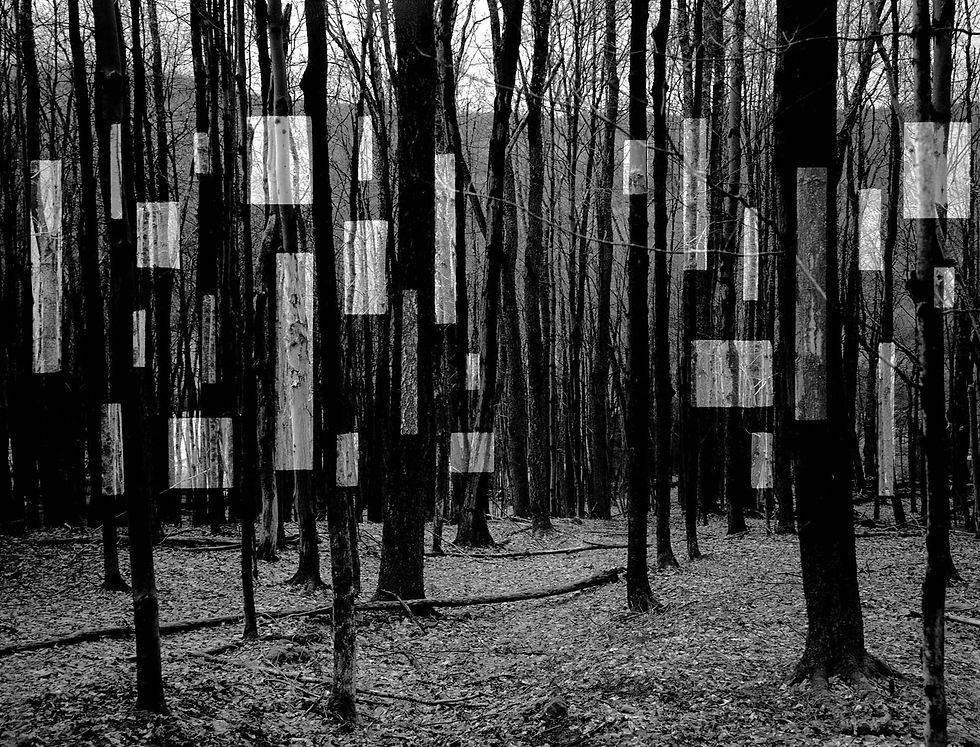
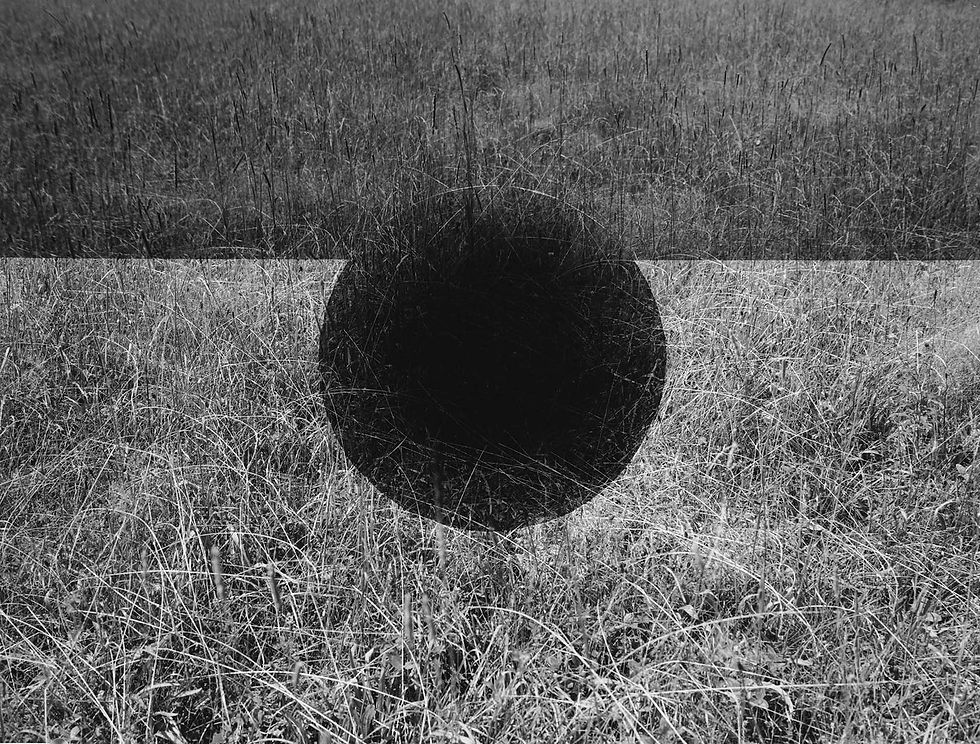
Informed by a deep commitment to traditional photographic methods, Dan’s practice moves between observation and transformation, where the natural world becomes both subject and material. In Altered Perceptions, his ongoing series, images drawn from the landscape are reworked through darkroom intervention, using masking techniques and gelatin silver printing to shift visual experience and reconsider what is seen.
Dan’s connection to the natural environment traces back to his early years growing up in rural Northern New York, where open fields, distant tree lines, and the structure of the land left a lasting impression. These experiences continue to inform his visual language, where composition, abstraction, and subtle intervention heighten attention and perception. Rather than describing the landscape, he repositions it, introducing elements that ask the viewer to engage more actively with the image.
His approach is both technical and intuitive. With a foundation that includes a BFA in Photography from SUNY New Paltz and years working as a photographic printer in New York City, Dan brings a deep understanding of process to his work. That knowledge is balanced by a life shaped through teaching and continued study, creating a practice that is disciplined yet open to discovery.
What emerges is a body of work that reflects both experience and inquiry. It is shaped by memory and driven by a sustained interest in how images can communicate beyond description. In this conversation, Dan reflects on process, perception, and the evolving relationship between control and possibility.

Tell us about how you create your work, what is your process, think out loud for us.
For my project, Altered Perceptions, I am drawing on long standing fundamental experiences with the natural world. Due to the complexity of the images and expense of working in film, both in time and money, I sketch out ideas and journal thoughts. Then, I go out in the field and seek to realize my vision. Exposure, processing, and making contact sheets must occur. When I view my contact sheets I work within the constraints of the captured images. That, ironically, is quite liberating as the challenge to work within limitations demands creativity.
Once my ideas are cemented, I have to make masks before any printing can occur. The darkroom aspect requires full scale drawings of the enlarged image in real scale, typically 16 x 20, the creation of masking films, all pin registered, aligning to enlargement specs, the processing of the masking films, and finally the gelatin silver printing. All multi day, time intensive steps that require visualizing the end product before starting.
As surprises occur in the darkroom, and they do, new possibilities emerge. Exciting stuff. This is where gut level decisions of emotion and message occur. In the moment, in the darkroom, adhering to a vision but responding to the psychology behind the evolving work. It is here, in the room with the red light, that I find most exciting. A sense of adventure is in play, and I have options to change course and depart from my initial vision. Controls over contrast, exposure, and compositional elements may be reconsidered in the moment as I watch the image emerge in the developer for the first time.
I love the surprises and the trajectory of the printing experience. Ultimately, prints are archivally washed, rack dried, and three days later examined. A single image often takes weeks from beginning to end.

What do you feel your work reveals about you that words sometimes cannot express?
I feel my work reveals that I am an artist seeking to see the world in an empirical and direct way. I want to identify core concepts and illuminate what is important in respect to emotion and perception. In great measure that is a reflection of my psychology and my need for clarity in a world that is often muddied, both on a personal and global level.
I feel my work also expresses my desire to create something of beauty and consequence that is original and unique. I want my ideas to be evidenced as product, a photographic print, that says, “Dan accomplished this. Here it is. What’s your opinion?” I feel these are universal revelations that all people share, but creative people express them in a manner that is product based.

What part of the making process do you secretly enjoy the most?
The process that I secretly enjoy the most depends, in part, on the subject matter. Photographing people on the streets, such as my Frames of Reference series, gives me a charge in the moment as I depress the shutter. It is exhilarating as I extract a moment of time and capture my subject for later viewing.
Conversely, when doing darkroom work, such as Altered Perceptions, the moment of excitement is when the image emerges in the developer, and I can ascertain if my expectations were met or not.

What is the foundation of your practice, what do you want to build upon, or strip down to find solid ground?
Great question. This is a question that I struggle with all the time. Altered Perceptions is an outcome of wanting to break down experiences to fundamentals. The very act of seeing and perceiving, the basis for an aesthetic experience, is primary. Uncomplicated perception.
Prehistoric cave art and Abstract Expressionism are two of my favorite areas of art. because they act on a primal experience and want to relate a fundamental message. I want my work to follow the K.I.S.S. mantra. Unclutter. Identify the message. Send the message without extraneous elements. That pursuit is easier said than done as photography’s inherent strength is in including detail and exalting description.
What has been the most difficult lesson your creative practice has taught you?
Be free but be judicious. The most difficult lesson is that perfection is the enemy of your art and adhering to one idea without moving from center is a killer. Unlike many art disciplines, photographers typically do not want to appear flippant about their work. Having a vision is important, but being reckless is often frowned upon.
Edward Weston made one or two 8 x 10 exposures in a day. Garry Winogrand made thousands, many rolls he did not even develop. I was steeped in the Edward Weston mentality and it was limiting. My advice to myself is stay curious, take photos that interest you regardless of whether you are working on a theme, and diversify.
When working in film, this is an expensive and hugely time intensive decision. Digital photography allows for this freedom, but at the expense of shooting too much that is not useful. To encourage artistic freedom, I keep some loose themes in my pocket and continually search out random images to add to the projects.

What does success look like to you as an artist?
I want to have my work seen and appreciated as a manifestation of my ideas and the energy and craft I have invested in its creation. On face value, that is what most artists want. The “why” question is what is most difficult to answer. Why do I want that recognition? The more I search for that answer, the more my initial response is likely to change.

What everyday moment recently made you stop and pay attention?
Children playing. As a retired fourth grade teacher I never grew tired of admiring how young people can seize happiness and joy with ease in the act of play. Children do it all the time, effortlessly. Every time I see a child reveling in joy it is as if I am seeing it for the first time.

What does creativity give you that nothing else quite does?
Creativity allows me to take the influences of the world and reconstitute them into something that is mine. I am part of a whole, but in doing my part I am unique. Belonging and being separate at the same time.

Is organization a part of your practice, or does chaos inspire the way you create art?
I have a schizophrenic relationship with organization and chaos. Photography, especially darkroom photography, requires a high degree of organization. However, once organized, then chaos can be embraced. So, I am organizing myself for chaos.

What small moment in your creative life recently felt meaningful?
I recently had hand surgery, and my arm is in a cast. Darkroom work was out of the question. Watching the news, I became upset by recent events regarding the movement of people. I immediately ordered miniature figures online, created sets in the studio, my garage, and vented my feelings through the creation of a new digital project, Them. It felt cathartic and allowed me to visually vent.
What is something small that always improves your day?
Reading. I like to have several books going at the same time. Reading is an essential part of my day.

If you could instantly learn any new skill, what would it be?
Playing guitar. The same guitar that I have been trying to learn to play with skill for twenty years.


Comments